Plasma Cutting machine
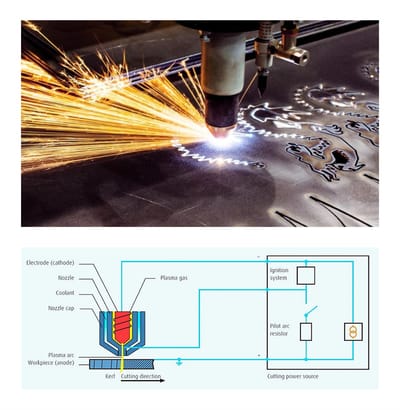
When the plasma jet hits the workpiece, recombination takes place and the gas reverts to its normal state, emitting intense heat as it does so. This heat melts the metal and the gas flow ejects it from the cut. Plasma gases are usually argon, argon/hydrogen or nitrogen. These inert gases can be replaced by air but this requires a special electrode of hafnium or zirconium. Use of compressed air makes this variant of the plasma process highly competitive with the oxy-fuel process for cutting carbon-manganese and stainless steels up to 20mm thick. Inert gases are preferred for high quality cuts in reactive alloys.
CONTACT US
Leave us a message
To get the most suitable price and service quickly
